Just finished #watching Laputa, Castle in the Sky again. It may not have the strongest plot out of all the Myazaki films, but it does have, in approximate order of appearance:
- Crazy awesome airships
- Mysterious crystals
- Flying pirates
- Bad guys who wear dark glasses at night, inside and underground
- Pseudo-Welsh miners
- A hermit who talks to rocks and has a beard
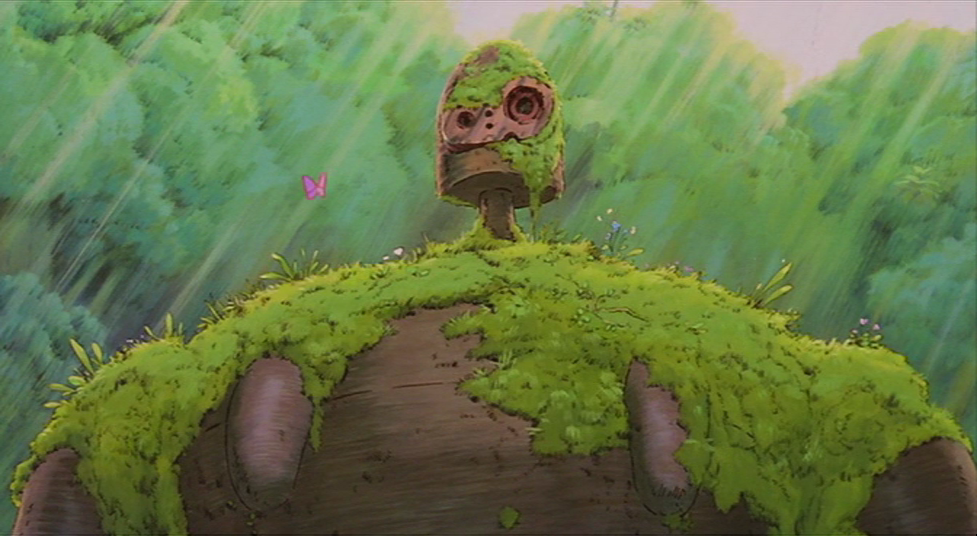
- Robots. Lots and lots of robots. One of them looks after birds nests and picks flowers. Others destroy things with their crazy laser vision.
- Stylised lightning which looks like dragons
- And at the end: a flying island which looks like a giant jellyfish, floating gracefully into orbit
The robots look like this:
My point being that anyone who demands any more than this from a film probably doesn’t deserve it.
 Aral Balkan
 Ben Werdmuller
 Erin Jo Richey

 Jeremy Keith
 Aitor García Rey